
Most personal trainers who go looking for a CRM have already tried one. It is still there, half set up, with a few stale client records and a lot of empty fields, because the system only worked if you updated it between sessions, and between sessions is exactly when you are coaching, driving, or catching your breath. The tool was not bad. It just needed an admin assistant you do not have.
That is the quiet failure of almost every CRM sold to fitness professionals: it stores clients but does nothing automatically. A lead lands in your Instagram DMs while you are on the gym floor, and by the time you get to your phone the conversation has gone cold. A client's 10-session package quietly runs out and nobody offers the renewal. A member misses two weeks and drifts away with no check-in. A personal trainer does not lose clients because they lack a CRM. They lose them because the CRM they have needs work nobody has time to do.
This guide compares the best options for trainers, coaches, and small studios honestly: what a fitness business actually needs, why generic tools and spreadsheets disappoint busy trainers, and which 2026 option is built to book sessions and chase renewals itself instead of adding one more chore to your evening.
Pricing reflects published rates as of July 2026; check each vendor's pricing page for current figures.
Why personal trainers are outgrowing generic tools in 2026
Four trends are pushing fitness professionals past spreadsheets and generic CRMs.
Leads now arrive in the DMs, and the tools do not. Most new clients come from Instagram, TikTok, referrals, and WhatsApp, not a web form. A CRM that does not live in those channels forces you to copy every conversation in by hand, and that is exactly the step that gets dropped when you are training back-to-back.
The follow-up math became impossible. One trainer cannot chase every enquiry, every expiring package, and every quiet client while also delivering sessions, writing programs, and running the business. A classic CRM only shows you the gap; it does not close it. What is missing is not another list of reminders, but something that acts on them.
Retention, not new leads, is where the money hides. Winning a new client costs far more than keeping an existing one, yet renewals and re-bookings are the first things to slip when a trainer is busy. Trainers need a system that notices when a package is ending or a client has gone quiet and does something about it automatically.
AI crossed from demo to dependable. Two years ago, an assistant that takes action was an impressive demo and not a reliable tool. In 2026, mature permission systems, confirmation flows, and safe execution mean an assistant can book sessions, send renewals, and update records responsibly. The category quietly moved from interesting to genuinely usable by people who do not care how it works.
Want to see it in action?
See Zoye catch a new lead, answer on WhatsApp and set up the follow-up, all from one message.
See How It WorksThe best CRMs for fitness trainers in 2026
The honest way to map this market is not a list of interchangeable apps; it is one AI Business Operator that does the work, alongside capable training and studio tools that still require you to operate them.
1. Zoye - the AI Business Operator that runs the client side for you
Zoye is the first AI Business Operator: an assistant with real write-access across an entire business workspace, built for owner-operated businesses like a solo trainer or a small studio rather than for developers or enterprise IT. Instead of you filling in the system, the Zoye Assistant executes: it captures leads from your DMs, books and reschedules sessions, chases package renewals and no-shows, sends motivation check-ins, and updates client records itself.
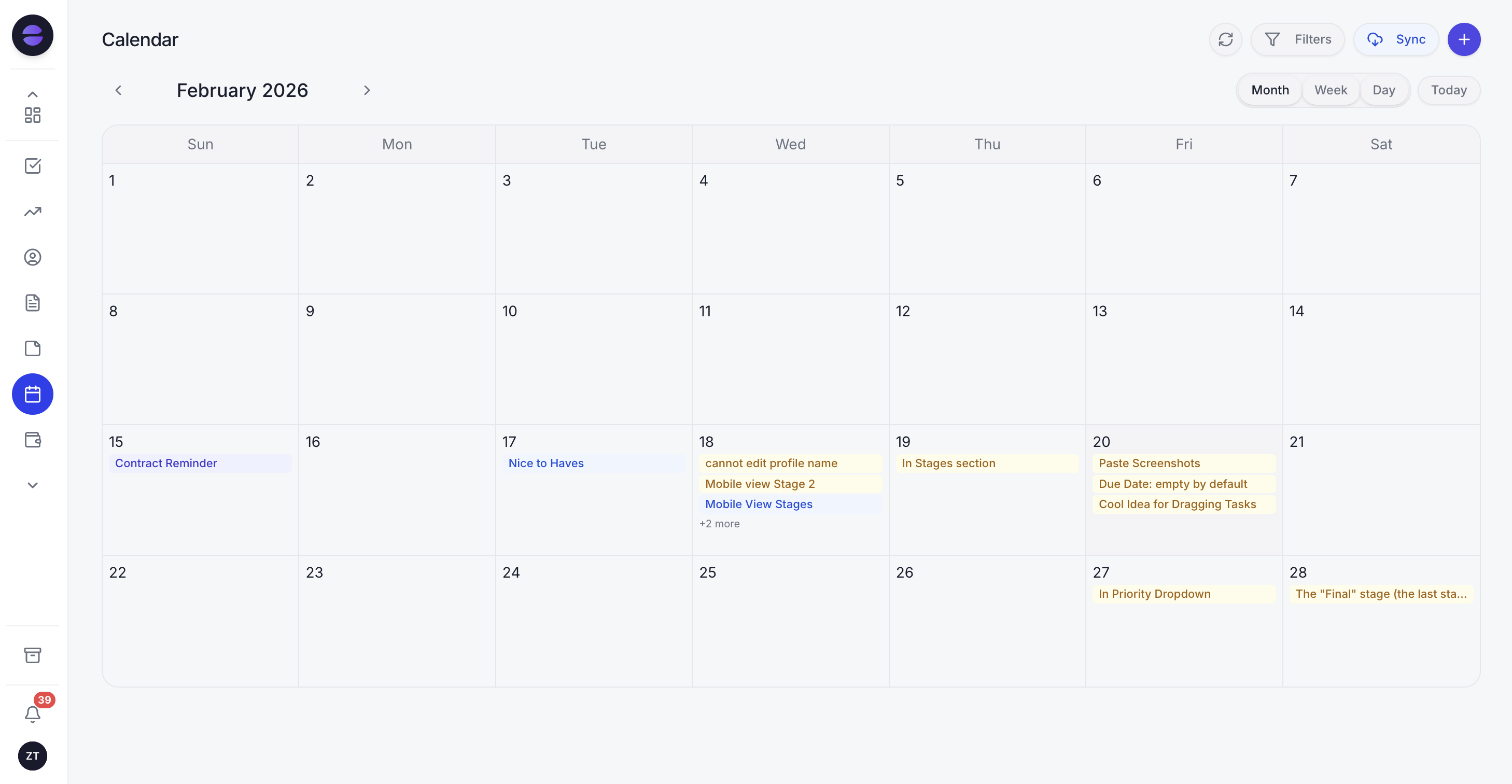 Zoye's calendar: the assistant books sessions, fills gaps, and reminds clients, so nothing depends on you remembering to update it between sessions
The interface is a conversation. Say "book Dana in for Friday at 7am and send her the confirmation" and the session exists on the calendar, with the reminder queued. Say "chase everyone whose package runs out this month and offer the renewal" and the messages go out. Say "when a new lead DMs me, reply within a minute and offer a free intro session" and the assistant builds and runs that automation itself; there is no workflow canvas to learn, because describing the outcome is the whole setup. It works the same on WhatsApp, so you run the business from the same app your clients already message you on.
Underneath the assistant sits a complete workspace: client and lead management, session scheduling with list, board, calendar, and timeline views, a shared calendar, budget tracking for packages and payments, and reports on retention and revenue, so the assistant's write-access covers the whole operation rather than one silo. The safety layer is what makes that trustworthy: destructive actions require confirmation, the assistant respects each user's permissions, and it never fabricates a record or claims it sent a message when it did not. A non-technical trainer never has to maintain any of it; you talk, it runs.
Pricing: Almost Free at $5 per month for 1 member with the core tools. Starter from $29 per month (10 members). Growth from $59 per month (20 members). Core tools included on every plan.
Best for: Solo trainers, coaches, and small studios that want one assistant to actually run leads, bookings, renewals, and client records, instead of another app to operate.
2. Trainerize - the client training-delivery app
Trainerize is a well-known platform for delivering workouts, tracking client progress, and staying in touch through an in-app feed. For a trainer whose priority is programming and coaching remotely, it is genuinely strong at the training-delivery side.
The trade-off is that it is built around program delivery, not running the business. Lead intake from your DMs, quoting, renewal chasing, and the wider operational picture still sit on you or on other tools. It coaches the client well; it does not chase the money or capture the enquiry for you.
Pricing: Per-plan tiers scaling with active client count; check the pricing page for current figures.
Best for: Online coaches focused on remote program delivery and progress tracking.
3. TrueCoach - the coaching delivery tool for programs and check-ins
TrueCoach is another solid coaching platform focused on program design, exercise libraries, and client check-ins. Trainers who run structured remote coaching like its clean workflow for assigning and reviewing workouts.
Like Trainerize, it is a delivery tool rather than a business operator. The pipeline of new enquiries, the follow-up on quiet leads, and the renewal reminders are outside its core, so you still need something to capture and chase. It handles the coaching; it does not run the front office.
Pricing: Per-client, per-month tiers; check the pricing page for current figures.
Best for: Coaches who want a focused tool for remote program delivery and client check-ins.
4. Mindbody - the studio booking and management platform
Mindbody is a heavyweight for studios and gyms, with class scheduling, memberships, and a consumer marketplace that can bring in new clients. For a larger studio running group classes and memberships, that breadth is real.
The trade-off is weight and cost. Mindbody takes meaningful setup and is priced for established studios, which can be heavy for a solo trainer or a small boutique. And like any booking platform, it stores and schedules; the proactive chasing of quiet clients and expiring packages is not something it does automatically.
Pricing: Tiered monthly plans aimed at studios; check the pricing page for current figures.
Best for: Established studios and gyms running group classes and memberships at scale.
See what Zoye can do for you
CRM, deals, tasks and your Instagram, Facebook and WhatsApp automations in one workspace. Just ask Zoye and it sets any of it up for you.
Explore Features5. HubSpot - the generic CRM that grows with you (if you maintain it)
HubSpot offers a strong free CRM and a sales and marketing platform that scales as a business grows. A studio planning to expand may like the breadth, and the free tier is useful to start.
The catch is that HubSpot is a generic CRM, not built for fitness, and its value depends entirely on how much you enter by hand. There is no concept of a training package or a session by default, and paid tiers climb quickly as you add features and contacts. The breadth does not remove the maintenance; it enlarges it.
Pricing: Free plan available. Paid tiers climb significantly by feature set and contact count.
Best for: Growing fitness businesses ready to configure a generic CRM and keep it fed.
6. Pipedrive - the simple sales CRM for closing enquiries
Pipedrive is one of the more sales-friendly CRMs, with a clean visual pipeline that makes it easy to see which enquiries are close to booking. For a trainer whose main gap is converting leads into paying clients, that simplicity helps.
The limitation is that it remains a system you operate. Every lead, every stage, and every follow-up still needs manual entry, and it knows nothing about sessions, renewals, or programs. It streamlines the sales pipeline; it does not close the maintenance gap or handle the fitness-specific side.
Pricing: Per-user, per-month tiers; check the pricing page for current figures.
Best for: Trainers who want a simple visual pipeline for converting enquiries and are happy to feed it themselves.
7. Spreadsheets - the free default that quietly breaks
A spreadsheet is where most trainers start, and for a handful of clients it works. It is free, flexible, and familiar, and there is no setup call to sit through.
The problem is that a spreadsheet does nothing. It will not remind a client that a session is tomorrow, notice that a package is ending, or answer a DM at 9pm. Every follow-up depends on you opening the file and remembering, which is exactly what stops happening once the client list grows. It is a fine record; it is not a system.
Pricing: Free.
Best for: Brand-new trainers with only a few clients who are not ready for any software yet.
Best CRM for solo trainers and independent coaches
For a solo trainer, the deciding factor is not features but who does the admin. You do not have a receptionist, so the only system that actually helps is one that answers enquiries, books sessions, and chases renewals without you. Zoye is the clearest pick here because the assistant does the front-office work itself, from the same WhatsApp thread your clients already use, so a quiet lead gets a nudge and an expiring package gets a renewal offer even while you are coaching.
Trainerize and TrueCoach are the runners-up if your priority is delivering programs remotely rather than running the business, though you will still want something to capture and chase leads.
Best CRM for small studios and boutiques
A small studio has a few trainers, group sessions, and memberships to keep track of, plus a steady flow of enquiries. Mindbody is the established heavyweight for class scheduling and memberships at scale, but it is priced and built for larger operations. For a lean boutique that wants bookings, renewals, and client follow-up handled without hiring an operations person, Zoye covers the whole loop in one workspace: the assistant books sessions across trainers, chases renewals, captures enquiries from every channel, and reports on retention and revenue, while respecting each staff member's permissions.
How to choose a CRM for your fitness business
Three questions cut through most of the marketing.
1. How much work is required after setup? Do not just ask whether the app looks nice. Ask who enters the data and sends the follow-ups. If the answer is you, between sessions, every time, you are buying another system to maintain. If it captures, books, and chases itself, you are buying back your evenings.
2. Does it just store data, or act on it? A coaching app and a generic CRM both show you what needs doing. An operator does it: sends the reminder, books the session, offers the renewal, updates the record. Decide whether you want a tool that lists your tasks or one that clears them.
3. Who runs it in six months? The graveyard of fitness software is full of tools that needed an admin the trainer never had. If a system requires flows, integrations, or a technical onboarding, be honest about whether that upkeep will actually happen between clients.
Why fitness trainers pick Zoye
A few themes come up consistently.
The difference is that it acts. A new DM gets answered, a quiet client gets a check-in, an expiring package gets a renewal offer, and a session lands on the calendar, none of it waiting on the trainer to remember. For a business with no front desk, that is the whole point.
You never have to keep it running. There is no automation canvas to wire together and no template library to curate. You tell Zoye what you want, on WhatsApp if that is easiest, and it stands up the routine and keeps it going for you.
It replaces the admin burden, not just a tool. Clients, leads, sessions, calendar, packages, and reports live in one workspace the assistant can act across, so the trainer stops being the link between a booking app, a spreadsheet, and their DMs.
And it is built to be handed real responsibility: it checks with you before anything irreversible, respects each teammate's permissions, and never reports a message it did not actually send. That guardrail is what lets a solo trainer or a small studio genuinely let go of the busywork.
Try Zoye with your team. The entry plan is Almost Free, with the core tools.
Ready to hand off the busywork?
Zoye brings AI-powered CRM, task management, and automation into one workspace.
Get StartedFor more context, see the best CRM for small business, the easiest CRM for small business, AI appointment scheduling, and the rest of the Zoye blog.