Most restaurant software is built for the floor: table maps, covers, turn times, and the POS. That side of the business is well served. The part that quietly leaks money is everything that happens before the guest sits down and after they leave. The private-event enquiry that landed in a shared inbox at 11pm and never got a reply. The regular who used to come every fortnight and has not been in for three months. The five-star review that never got asked for because the shift was slammed.
An independent restaurant, a busy cafe, or a small hospitality group does not lose guests because the food slipped. It loses them because nobody had time to answer the enquiry, confirm the booking, say thank you, or invite them back. That work is real work, and on a full service night there is nobody free to do it. A CRM for restaurants is meant to close that gap: one place for every guest, every enquiry, and every follow-up, so relationships do not depend on whoever happened to check the inbox.
This guide compares the seven best options for restaurants in 2026, ranked for independent venues and small groups that take reservations, private-event enquiries, and reviews mostly by phone and WhatsApp. The first pick is different in kind from the rest, and that difference is the whole point.
Pricing reflects published rates as of July 2026; check each vendor's pricing page for current figures.
Why restaurant guest management breaks in 2026
The enquiries arrive where nobody is watching. A birthday dinner enquiry comes in on WhatsApp. A corporate lunch request lands in the website form. A regular DMs on Instagram to book a table. During service, none of those get answered fast, and a slow reply on a private event usually means the booking went to the venue that replied first.
The tools you own do not talk to each other. The reservation app knows about covers. The POS knows about spend. The inbox knows about messages. None of them knows that the guest who enquired about a christening lunch is the same regular who has been in twelve times this year. So the relationship never gets treated as a relationship.
Follow-up is the first thing to drop. Thanking a guest, asking for a review, and inviting lapsed diners back are all high-value, low-urgency tasks. On a busy floor, low-urgency always loses. The result is a slow, invisible leak of repeat custom that no report ever flags because the guest simply stops appearing.
Most "restaurant CRMs" are really reservation books. They store bookings and contact details beautifully, but they still expect a human to notice the enquiry, write the reply, remember the deposit, and send the win-back. They are filing cabinets, not workers. The restaurant is left doing the chasing itself, which is exactly the work there is no time for.
The 7 best CRM options for restaurants in 2026
1. Zoye - the operator that captures, books, and follows up for you
Zoye is first because it does not just store your guests, it runs the guest work for you. Where a traditional restaurant CRM waits for someone to answer the enquiry and send the follow-up, Zoye is the AI Business Operator that captures the enquiry, books the table or event, confirms it, and chases the follow-up automatically, mostly over WhatsApp and email.
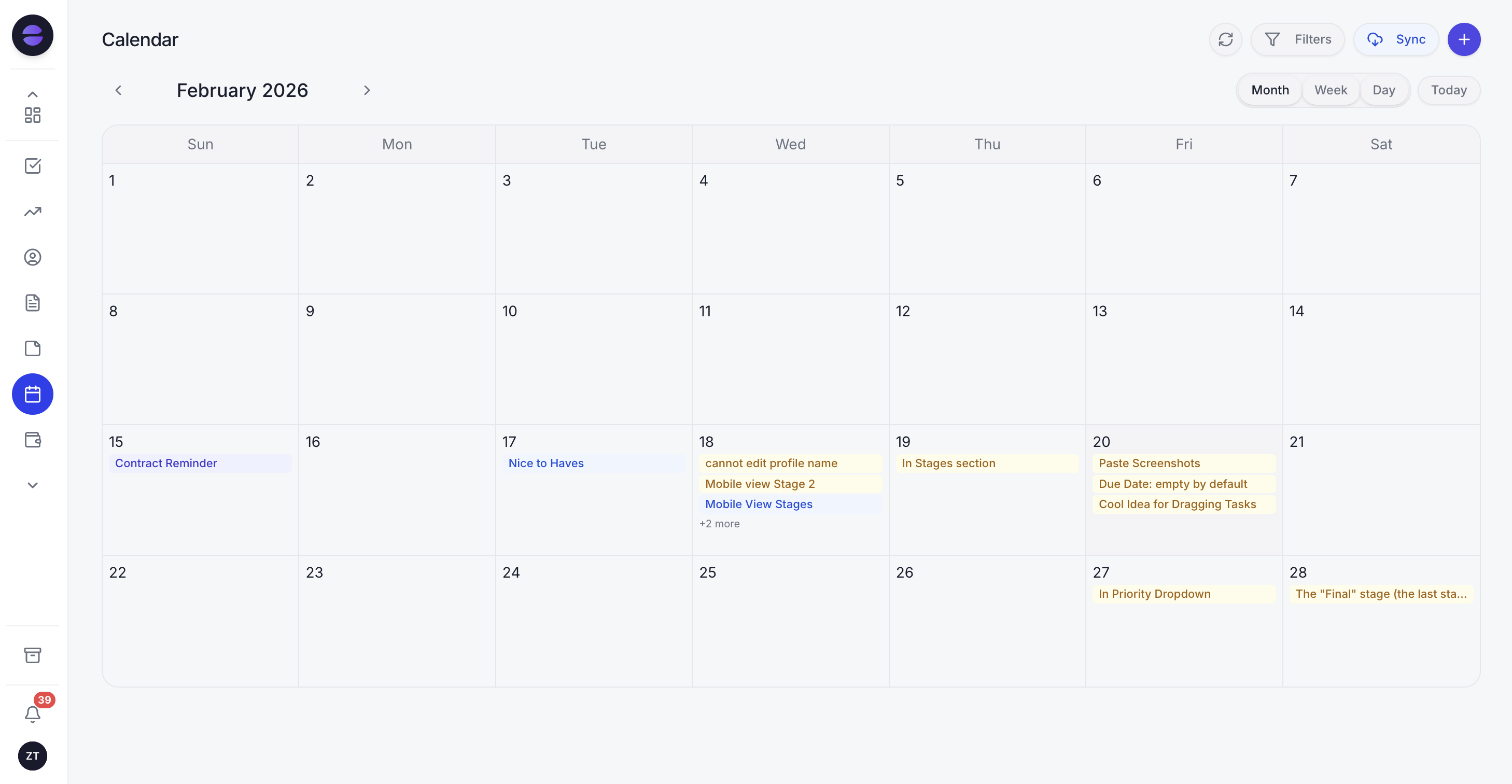 Reservations and private-event enquiries share one Zoye calendar, so the assistant can book, confirm, and remind without anyone watching the inbox.
Here is what that looks like in a real week. A private-event enquiry arrives on WhatsApp while you are on the pass. Zoye replies in seconds with your availability, captures the party size and date, drops a hold on the calendar, and asks the guest for the details you need. When they confirm, it books the event, sends the confirmation, and schedules a reminder to collect the deposit. You find out it happened because the booking is already on the calendar, not because you sat down at midnight to answer the message.
The part that sets Zoye apart is that you do not build any of this. You tell Zoye what you want, the way you would brief your floor manager, including over WhatsApp, and it builds the automation itself. Tell it "when someone asks about a private event, reply with our packages and put a hold on the calendar," or "the day after any table booking, send a thank-you and ask for a Google review," or "message guests who have not been in for 90 days with a come-back offer." It sets up the flow, runs it on schedule, and logs every reply back onto the guest record. No funnel builder, no template library to wire up, no automation canvas to learn between services.
Want to see it in action?
See Zoye catch a new lead, answer on WhatsApp and set up the follow-up, all from one message.
See How It WorksBecause Zoye is an operator and not just a database, the guest record is always current without anyone updating it. Every enquiry, booking, confirmation, review request, and win-back message is logged automatically, so when a guest calls you can see their whole history at a glance: how often they come, what they booked last time, whether they had an event with you. That is the opposite of the CRM you bought and stopped updating, because there is nothing to update by hand.
Around the guest work sits the rest of the business in one workspace: a shared inbox for WhatsApp and email so the whole team can see and reply to enquiries, a calendar that holds tables and events together, tasks for the front-of-house team, and reports that show enquiries, bookings, no-shows, and repeat visits in one place. It centralises the messages that today are scattered across three phones and a website form, and the assistant drafts and routes replies so only the things that genuinely need a human reach a human.
To be clear about scope: Zoye is not a POS, a kitchen display, or a table-turn optimiser, and it does not pretend to be. It sits across the guest relationship, enquiries, bookings, follow-ups, events, reviews, and win-back, and it plays nicely alongside a dedicated floor tool if you use one.
Pricing: Almost Free at $5 per month for 1 member with the core tools. Starter from $29 per month (10 members). Growth from $59 per month (20 members).
Best for: Independent restaurants, cafes, and small hospitality groups that want enquiries captured, tables and events booked, and guests followed up automatically, without building funnels.
2. OpenTable - the reservation network with guest profiles
OpenTable is the reservation and guest-management standard, with a large diner network, waitlist tools, and guest profiles that track visits and preferences. For a restaurant that wants inbound reservations from a marketplace, it is a strong front-of-house tool.
The trade-off is that it is a reservation system first. It stores guest profiles well, but the outbound follow-up, review requests, and win-back are still on you to run, and the diner-network cover fees add up. Private-event enquiries and WhatsApp conversations live outside it.
Pricing: Custom, typically a monthly subscription plus per-cover reservation fees; check OpenTable's site for current figures.
Best for: Restaurants that want inbound bookings from a large diner network.
3. SevenRooms - the guest-experience platform for groups
SevenRooms is a guest-experience and retention platform aimed at restaurant groups, with rich guest profiles, direct reservations, and marketing automation layered on top. It is more retention-minded than a pure reservation book.
The trade-off is that it is built for larger operators, with pricing and a setup to match. A single independent venue often finds it heavier and pricier than the guest work actually requires, and you still configure the automations yourself.
Pricing: Custom, quote-based; generally aimed at multi-outlet operators.
Best for: Established restaurant groups that want deep guest data and direct bookings.
4. Toast - the restaurant POS with built-in CRM features
Toast is a restaurant POS platform with guest data and marketing features attached to the point of sale. Because it sits on the transaction, it can tie spend to guests and send email or SMS campaigns off that data.
The trade-off is that the CRM layer is an add-on to a POS, so it is only as complete as the POS captures. Enquiries that never became a transaction, private-event requests, and WhatsApp conversations are outside its view, and it is a commitment to a full POS ecosystem.
Pricing: Hardware plus software tiers, with marketing as a paid add-on; check Toast's site for current figures.
Best for: Restaurants that want their POS and basic guest marketing in one system.
5. Mailchimp - the email marketing tool restaurants reach for
Plenty of restaurants use Mailchimp as their de facto guest CRM: a contact list plus newsletters and the odd automation. It is familiar, cheap to start, and fine for a monthly what's-on email.
The trade-off is that it is a broadcast email tool, not a guest operator. It does not capture enquiries, book tables, handle WhatsApp, or manage private events. Everything two-way still happens somewhere else, and the guest record is just an email address on a list.
Pricing: Free tier with limits; paid plans scale with contact count.
Best for: Restaurants that only need an email newsletter to their list.
6. HubSpot - the generic CRM adapted to hospitality
HubSpot is a capable general-purpose CRM that a restaurant can bend to guest management: contacts, pipelines for event enquiries, and email automation. For a venue that does a lot of private events and wants a structured sales pipeline, it can work.
The trade-off is that it is built for B2B sales, not restaurant service. There is real setup to make it fit hospitality, the useful automation sits in paid tiers, and none of it is restaurant-shaped out of the box. It stores and it automates, but it does not run the floor's follow-ups for you.
Pricing: Free CRM tier; paid Marketing and Sales hubs scale up quickly.
Best for: Restaurants with a heavy private-events business that want a full sales pipeline.
7. A spreadsheet plus your phone - the honest starting point
Most independent venues actually start here: a shared spreadsheet of regulars and a phone full of WhatsApp threads. It costs nothing and everyone knows how to use it.
The trade-off is that it does not scale past a few dozen guests and it depends entirely on someone remembering to update it and follow up. The enquiry that arrives mid-service is exactly the one the spreadsheet never captures. It is a fine place to begin and a bad place to stay.
Pricing: Free.
Best for: A brand-new venue testing what guest management it actually needs.
Best CRM for capturing restaurant enquiries
The single highest-value job is making sure no enquiry goes unanswered, because a slow reply on a private event usually loses the booking. Zoye leads here because it captures enquiries from WhatsApp, Instagram, and your website into one shared inbox and replies in seconds, day or night, then books the hold itself.
OpenTable and SevenRooms handle inbound reservations from their networks well, but enquiries that come by message or form still need a human to catch them. That is the gap Zoye is built to close.
Best CRM for private events and follow-ups
Private events are where the money and the missed follow-ups concentrate: an enquiry, a proposal, a deposit, a confirmation, and reminders, all of which someone has to chase. Zoye runs that whole thread for you. It replies to the enquiry, sends the package details, holds the date, chases the deposit, and reminds the guest before the event, logging each step on the record.
HubSpot can model an event pipeline if you build it, and SevenRooms handles events for larger groups, but both leave the chasing to you. Zoye does the chasing, which is the part restaurants have no time for.
See what Zoye can do for you
CRM, deals, tasks and your Instagram, Facebook and WhatsApp automations in one workspace. Just ask Zoye and it sets any of it up for you.
Explore FeaturesHow to choose the right restaurant CRM
Three questions narrow it down.
1. Do you need a floor tool or a guest operator? If your gap is table maps and covers during service, a reservation or POS tool is the answer. If your gap is enquiries going unanswered and guests not coming back, you need an operator like Zoye that captures and follows up. Many venues run both.
2. Where do your enquiries actually arrive? If most guest conversations happen on WhatsApp, Instagram, and phone, choose the tool that centralises those and replies fast. A newsletter tool or a POS-attached CRM will not catch a WhatsApp event enquiry.
3. Do you want to build the automations or have them built? Every generic CRM and marketing tool expects you to set up the flows. Zoye is the one where you describe the follow-up and it builds and runs it, so it actually happens on a busy week.
Why restaurants pick Zoye
A few themes come up again and again.
It answers the enquiries you cannot get to. The private-event message that arrives mid-service gets a fast, on-brand reply and a held date, instead of sitting unread until the booking has gone elsewhere.
It keeps its own records. Every enquiry, booking, review request, and win-back is logged automatically, so the guest history is always current and nobody is doing data entry after close.
It does the follow-up you never have time for. Thank-yous, review requests, deposit chasing, and win-back messages all go out on schedule over WhatsApp and email, turning one-time diners into regulars without anyone remembering to send them.
Try Zoye with your restaurant. The entry plan is Almost Free, with the core tools.
For more context, see CRM for small business, CRM for event planners, and the WhatsApp CRM for clinics guide on running guest messaging without chaos.