
Best Intercom Alternatives 2026: 7 Customer Support Platforms
Intercom is a genuinely powerful customer messaging and support platform. Its live chat, in-app messaging, and AI bot are best-in-class for product-led companies that run high-volume conversations and want automation at scale. If that is your world, Intercom earns its place, and this guide is honest about that.
The trouble for most teams is twofold. First, the pricing is opaque and climbs fast: layered seat costs combine with resolution-based AI fees, so the bill grows with your volume in ways that are hard to predict before the invoice arrives. Second, Intercom is support-only. The conversation lives in the support tool while the customer's contacts, companies, deals, and history sit in a separate CRM, so small teams spend their day switching tools and copying context across. This guide compares the seven best Intercom alternatives in 2026, and it is clear about fit: high-volume ticketing teams are well served by a couple of the options below, while teams that want customer conversations tied to the business will find a lighter, all-in-one approach fits better.
Pricing reflects published rates as of June 2026; check each vendor's pricing page for current figures.
Why teams are looking beyond Intercom in 2026
Four trends drive the migration.
Opaque pricing that climbs fast. Intercom's cost is hard to pin down before you commit. Seat pricing stacks with add-ons, and the AI is billed on resolutions, so a busy month inflates the bill with little warning. Teams that want a predictable line item are moving to flat-rate alternatives where the price does not move with volume.
Resolution-based AI fees punish success. When the AI bot resolves a conversation, you pay for it. That sounds fair until volume grows and the per-resolution charges stack on top of seat costs. For a small team, an AI assistant included in a flat plan is far easier to budget than a meter that ticks with every interaction.
Support is siloed from the CRM. Intercom is built for support, not as a place to run the whole customer relationship. The conversation sits apart from the deals, the company record, and the follow-up tasks. Small teams want the customer message next to everything else they know about that customer, not in a separate tool they have to cross-reference.
Much of the power is overkill for small teams. Intercom shines for chat-first product companies with the volume and staff to use its automation, bots, and product tours. A small team answering email and chasing follow-up rarely needs that depth, and pays for it anyway. A lighter approach covers the real need without the unused machinery.
The 7 best Intercom alternatives in 2026
1. Zoye - customer conversations tied to the business
Zoye is the strongest Intercom alternative for teams whose idea of support is staying on top of customer relationships and follow-through, rather than running a high-volume ticket queue. Instead of a standalone support tool, Zoye keeps customer conversations next to the CRM, so the contact, their company, their deals, and their history live in the same workspace as the message.
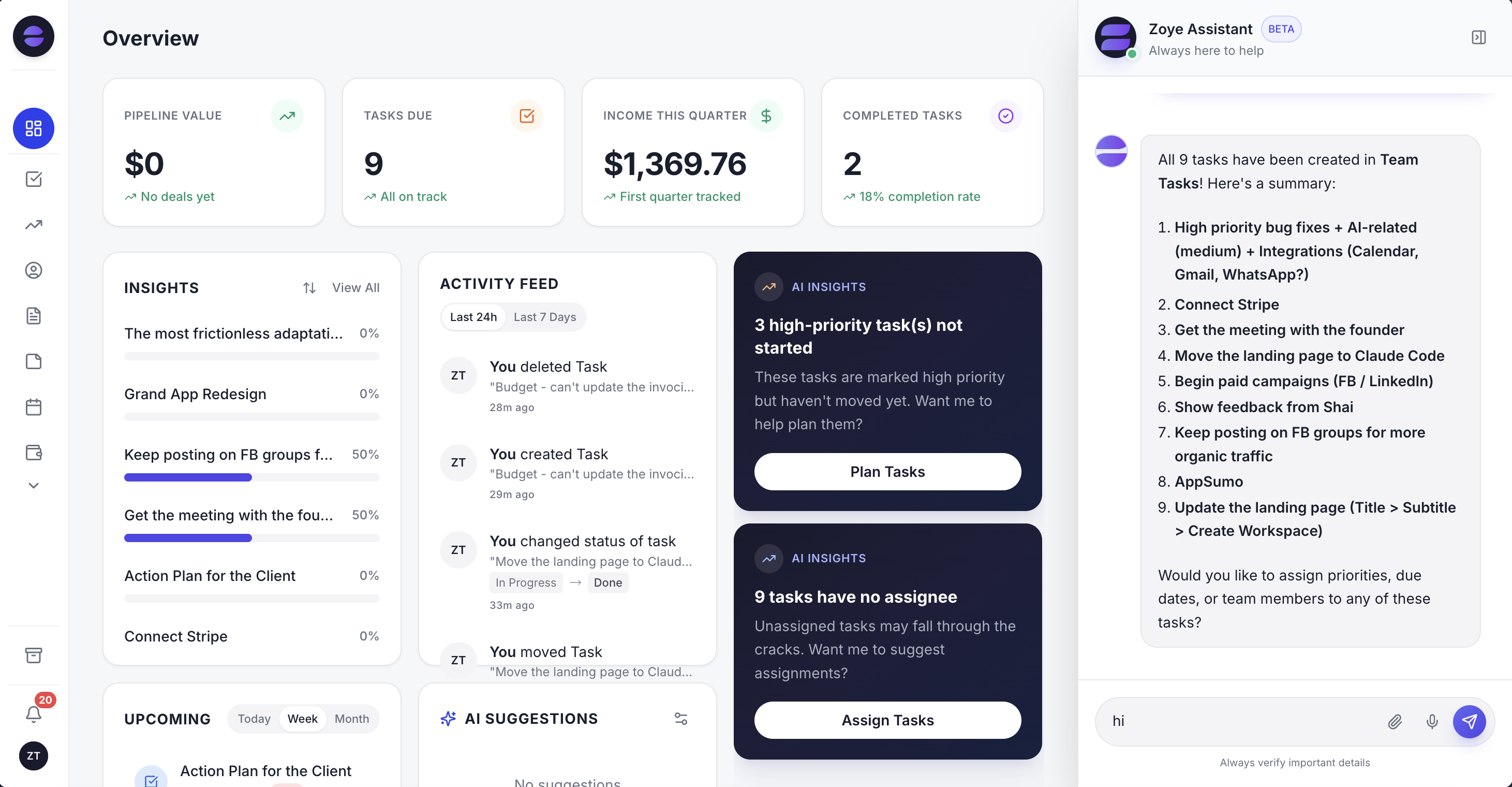 Zoye keeps customer conversations next to the CRM, with proactive AI Insights and the Zoye Assistant always on hand
Be honest about what Zoye is and is not. Zoye is not a full ticketing helpdesk with SLAs, routing rules, and agent queues. If you run a high-volume support operation and need structured ticketing, choose Zendesk or Freshdesk below. What Zoye does is centralise contacts, companies, deals, and customer history in one CRM workspace, with a live WhatsApp integration so customer messages arrive next to everything else you know about that customer. It is the right pick when support really means relationships and follow-through, not a queue of tickets.
Zoye Assistant - AI that drafts and follows through
The AI is the differentiator. The Zoye Assistant takes action rather than just suggesting: it drafts replies to customers, surfaces follow-ups that are due, and creates tasks directly from incoming customer emails so nothing slips through the cracks. It prioritises by deadline and workload, and it can produce a summary of where a customer relationship stands on demand. Crucially, the assistant is included in the flat plan, so there are no resolution-based fees ticking up as it works. Where Intercom meters AI by the resolution, Zoye folds it into the price.
The all-in-one workspace around the customer
Beyond customer conversations, Zoye includes a native CRM with contacts, companies, deals, and pipeline stages, tasks with list, board, calendar, and timeline views, a calendar, budget tracking, and reports, all in one workspace.
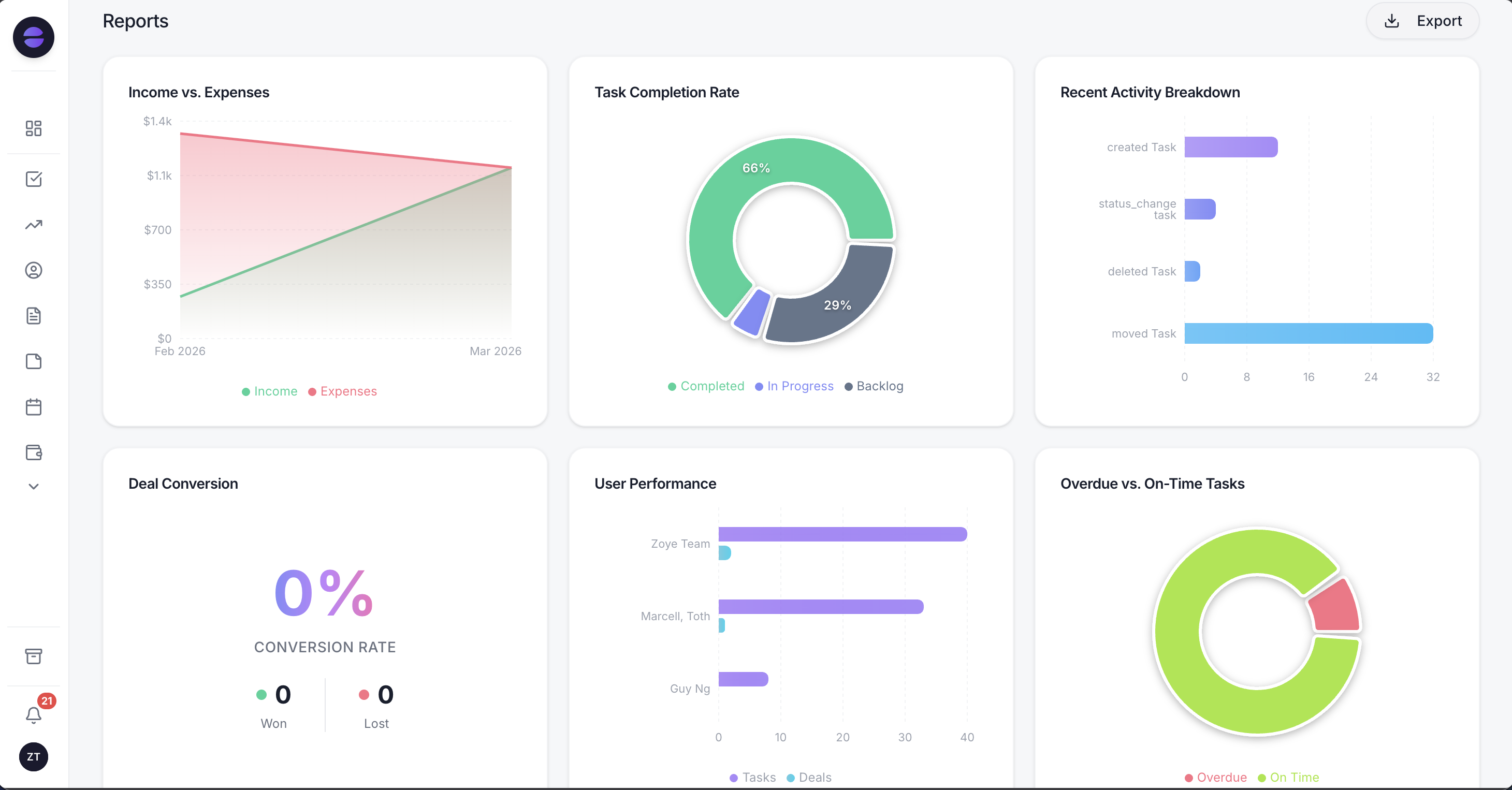 Reports pull contacts, deals, tasks, and activity into one exportable view, so you see the whole customer relationship, not a ticket count
The value for a small team is that the conversation never sits in isolation. A WhatsApp message or an email is one click from the contact record, their open deals, and the tasks tied to them. Nobody copies context between a support tool and a CRM, because there is only one workspace.
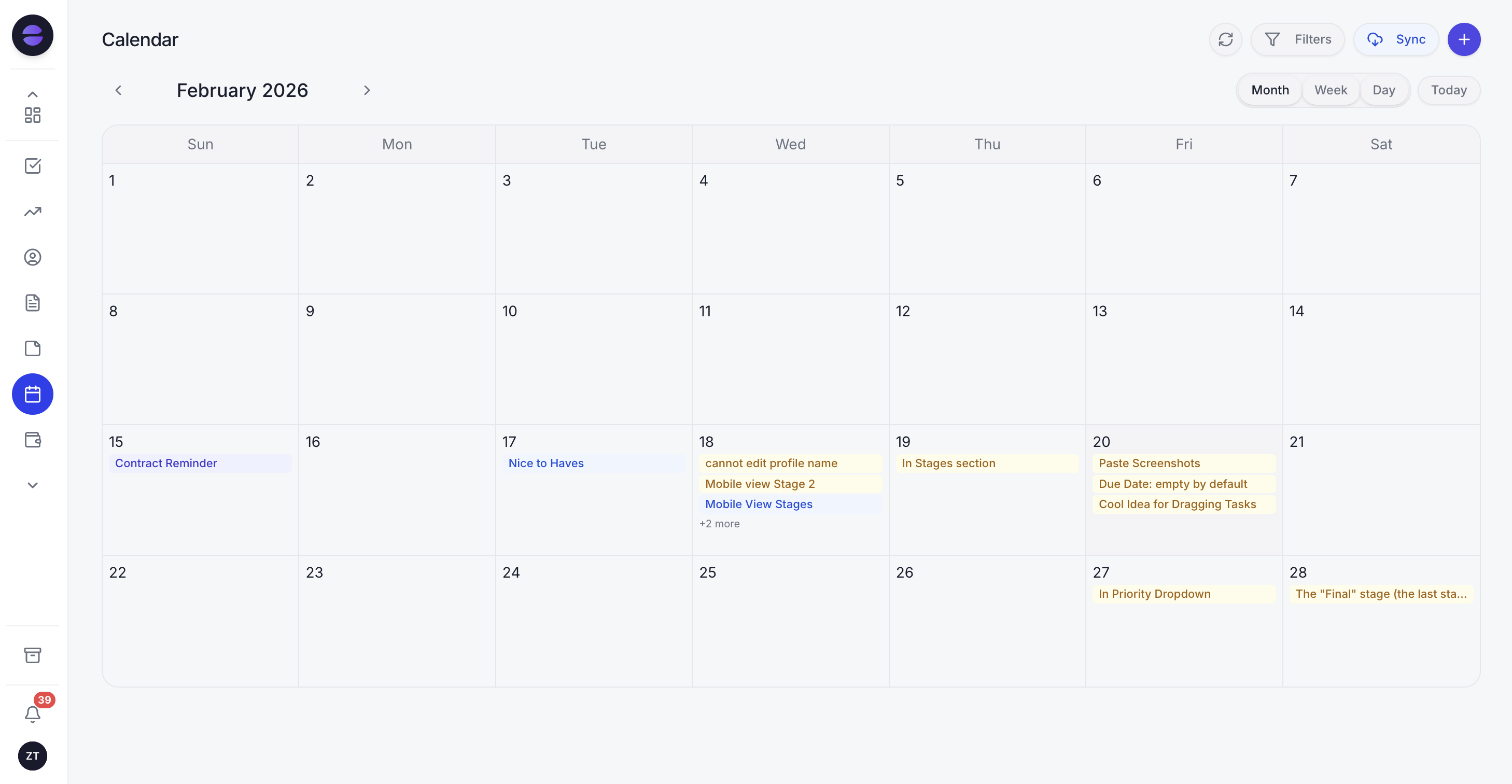 Follow-up tasks the assistant creates from customer emails land on the calendar automatically, so nothing is forgotten
The pricing model is flat-rate and genuinely affordable. The entry plan, Almost Free, starts at just $5 per month ($4 per month billed annually) and lets a solo founder run customer conversations, CRM, and AI follow-up for the price of a cup of coffee. Small teams scale to Starter at $29 per month, Growth at $59 per month. Every plan includes the full platform and all tools, with no per-seat or per-resolution surprises, and you can cancel or upgrade anytime.
Pricing: Almost Free from $5 per month ($4 per month billed annually) for 1 member with the full platform including AI, and 1 GB storage. Starter from $29 per month (10 members). Growth from $59 per month (20 members). Flat-rate, not per-seat.
Best for: Teams whose support is really customer relationships and follow-through, who want conversations, WhatsApp, CRM, and an acting AI in one flat-rate workspace.
2. Zendesk - the enterprise help desk for high-volume support
Zendesk is a mature, full-featured ticketing help desk and a direct Intercom competitor for support at scale. It has SLAs, routing, automations, and a deep agent workspace built for dedicated support teams handling thousands of tickets. The trade-off is the same heaviness that comes with that power: per-agent pricing climbs quickly, and the setup of triggers, business rules, and macros is a project in itself, which is overkill for a small team.
Pricing: Per-agent, per-month plans that climb with the feature tier; check the vendor pricing page for current figures.
Best for: High-volume support organisations that need structured ticketing, SLAs, and routing at scale.
3. Freshdesk - the full help desk at a friendlier entry point
Freshdesk is a genuine ticketing help desk and one of the most popular Intercom and Zendesk alternatives, with SLAs, automations, and multichannel support. It tends to start cheaper than Zendesk and has a usable free tier. The trade-off is that it is still a real help desk built for dedicated support staff, so the configuration overhead and per-agent pricing add up once you move past the limited free plan.
Pricing: Free tier with limits; paid plans are per agent per month. Check the vendor pricing page for current figures.
Best for: Growing support teams that want full ticketing at a lower entry point than Zendesk or Intercom.
4. Help Scout - the simple shared inbox
Help Scout is a clean, email-style shared inbox that many small teams prefer over chat-first platforms like Intercom. It is friendly to set up and pleasant to use day to day. The trade-off is that it is deliberately focused on the shared inbox: it is lighter on bots, automation, and in-app messaging than Intercom, and it is a support tool rather than a workspace, so the CRM and the wider operation still live elsewhere.
Pricing: Per-user, per-month plans; check the vendor pricing page for current figures.
Best for: Small teams that want a polished email shared inbox without chat-first complexity.
5. Crisp - the affordable all-in-one messaging suite
Crisp bundles live chat, a shared inbox, a chatbot, and a small CRM into an affordable package, which makes it a popular budget Intercom alternative. The trade-off is depth: Crisp covers a lot of ground at a low price, but its CRM and automation are lighter than dedicated tools, and very high-volume teams may outgrow it. For a small team wanting chat plus light CRM cheaply, it is a strong value pick.
Pricing: Free tier with limits; affordable flat paid plans. Check the vendor pricing page for current figures.
Best for: Budget-conscious small teams that want live chat plus light CRM in one inexpensive tool.
6. Tidio - live chat and bots for small online businesses
Tidio focuses on live chat and chatbots aimed at small online stores and websites, with an AI bot layer and easy widgets. It is quick to deploy and friendly for non-technical owners. The trade-off is scope: Tidio is centred on the chat widget and bot flows rather than a full support desk or CRM, so it covers the front-of-site conversation well but leaves the wider customer relationship to other tools.
Pricing: Free tier with limits; paid plans by feature and contact volume. Check the vendor pricing page for current figures.
Best for: Small online businesses that want live chat and bots on their website without heavy setup.
7. HubSpot Service Hub - the help desk attached to a CRM
HubSpot Service Hub is a help desk built on top of HubSpot's CRM, so customer context and tickets sit together, which is a real advantage over support-only Intercom. The trade-off is that the genuinely useful service features sit in the paid tiers, and the full value depends on adopting the broader HubSpot platform, which gets expensive as a small team scales across its hubs and contact tiers.
Pricing: Free tier with limits; paid Service Hub tiers per seat, plus contact-tier costs as you scale. Check the vendor pricing page for current figures.
Best for: Teams already on HubSpot that want ticketing tied to their existing CRM.
Best Intercom alternative for small business
For a small business that does not run a dedicated, high-volume support desk, Zoye is the clearest pick because it removes the two things that make Intercom a poor fit: the opaque, resolution-based pricing and the support-only silo. Customer conversations live next to the CRM and tasks, WhatsApp is integrated, the assistant drafts replies and creates follow-up tasks from incoming emails, and the flat-rate price does not climb with your volume. You stay on top of customer relationships without paying a meter or stitching a support tool to a separate CRM.
If your team really is a high-volume support operation with structured ticket queues and SLA targets, the honest answer is different: Zendesk or Freshdesk gives you a real help desk built for that scale, and Crisp or Tidio gives you an inexpensive chat widget if front-of-site messaging is the main need.
Best AI-powered Intercom alternative
Zoye is the alternative on this list where the AI does the work without metering you for it. Intercom's AI bot is capable, but it is billed on resolutions, so the cost rises with success. The Zoye Assistant is included in the flat plan: it drafts the actual reply to a customer, turns an incoming email into a follow-up task so it is not forgotten, surfaces which customers are due for a follow-up, prioritises by deadline and importance, and summarises where a relationship stands on demand. For a small team that wants AI to draft and chase rather than to bill per interaction, an assistant folded into the plan is worth more than a meter.
How to choose the right Intercom alternative for your team
Three questions narrow the choice.
1. Is your support a high-volume ticket queue, or customer relationships and follow-through? If you have agents working a chat or ticket queue all day with SLA targets, you need a real help desk: Zendesk or Freshdesk. If support means staying on top of customer relationships and never dropping a follow-up, a lighter all-in-one like Zoye fits better.
2. Do you want conversations next to the CRM, or in a separate tool? Support-only platforms keep the conversation apart from the customer record. If switching tools and copying context across is the daily friction you want to remove, choose something that keeps conversations next to the CRM, like Zoye or HubSpot Service Hub.
3. How predictable does the bill need to be? If resolution-based and per-seat charges that move with volume are fine, Intercom and the per-agent help desks work. If you want a flat line item that does not climb as you grow, Zoye's tier pricing is built for that.
Migration from Intercom to a workspace built around the customer
Leaving Intercom is usually a simplification, not a like-for-like rebuild. Most teams that move are not recreating bot flows and resolution meters elsewhere; they are deciding the heavy chat-first machinery was more than they needed. So the migration is less a wholesale data export and more a decision about what to keep.
The pragmatic approach is to bring forward the customer contacts and the open conversations, and leave the automation engine behind. Export your contact list and active threads, import the contacts into the new workspace's CRM, connect WhatsApp so live messages flow in, and let the open conversations sit next to each customer record. Closed historical chats can stay archived in Intercom for reference rather than being migrated in bulk.
For teams moving to Zoye specifically, the assistant helps with the reset. Describe how your team handles customer messages today, and it proposes how to organise contacts, conversations, and follow-up tasks in the new workspace, and it handles dedup and tagging as records come across. Because there is no bot-flow system to recreate, the switch is usually quick: the point of leaving Intercom was to stop paying for and maintaining that machinery in the first place.
What changes when support lives next to the CRM
The post-migration experience is shaped by three changes that make a workspace built around the customer feel fundamentally different from a support-only tool.
First, context stops disappearing. In a support-only platform, the agent sees the conversation but has to leave to find the customer's deals, company, and history. When conversations live next to the CRM, the customer, their open work, and the thread are all on one screen. Nobody cross-references two tools anymore.
Second, follow-up stops slipping. An incoming email becomes a task in the same workspace, and the assistant surfaces who is due for a follow-up. The small team stops relying on memory and a separate inbox to track what is owed to whom.
Third, the cost stops moving with volume. There are no per-resolution AI fees and no per-agent tiers to budget around. The flat-rate plan covers the whole team and includes the assistant, so a busy month does not inflate the bill.
Why teams pick Zoye as their Intercom alternative
A few themes come up consistently.
The pricing is predictable. Flat-rate plans cover the whole team and include the AI, so neither headcount nor conversation volume multiplies the bill the way per-seat and per-resolution pricing does.
The conversation lives with the customer. Support sits next to the CRM, deals, and tasks, with WhatsApp integrated, so context is never lost and nobody switches tools to find a customer's history.
The AI drafts and chases. The Zoye Assistant writes replies, turns incoming emails into tasks, and surfaces who is due for a follow-up, so a small team keeps up with customer relationships without a dedicated support desk.
Give support, sales, and everything that happens after the conversation a single home instead of another siloed inbox. The Almost Free plan starts at $5 per month, or $4 per month billed annually, with the whole platform and its AI, and you can cancel or upgrade whenever you need.
For more context, see the best Zendesk alternatives, the best HubSpot alternatives, the best AI tools for business, and how to choose a CRM.