
Best Gantt Chart Software 2026: 7 Tools for Timeline-Based Project Management
A Gantt chart is one of the clearest ways to plan work over time. It maps every task to a bar on a timeline, shows how long each one takes, and links dependencies so the whole team can see what blocks what. For project managers running a launch, a build, or a multi-stage rollout, that visual timeline is hard to beat.
The problem with most dedicated Gantt tools is that the chart lives on its own island. It shows a beautiful timeline, but it is disconnected from the team's daily task list, the CRM where customer work lives, and the reports leadership actually reads. Someone has to keep the chart in sync by hand, and the moment a deadline slips in real life, the Gantt chart quietly goes stale. The traditional heavyweight, Microsoft Project, solves the planning depth but is expensive, heavy to learn, and overkill for most teams.
This guide compares the seven best Gantt chart software options in 2026, ranked for teams that want timeline-based planning without the chart drifting away from the work it is supposed to represent.
Pricing reflects published rates as of June 2026; check each vendor's pricing page for current figures.
Why teams are looking beyond standalone Gantt tools in 2026
Four trends are pushing teams toward a different kind of timeline.
The chart drifts out of sync with the real work. A dedicated Gantt tool stores its own copy of the plan. When a task moves in the team's task manager, someone has to remember to drag the bar in the Gantt tool too. Within a few weeks the chart and reality diverge, and the timeline becomes a planning artifact nobody trusts.
Timelines are disconnected from tasks, CRM, and reporting. Most Gantt tools only do the chart. The team still works in a separate task app, customer commitments sit in a separate CRM, and leadership pulls status from a separate reporting tool. The Gantt timeline is one more silo to maintain rather than a window onto live work.
Traditional tools are heavy and expensive. Microsoft Project is the classic answer for serious scheduling, but it carries a steep learning curve, a desktop-first legacy, and per-seat pricing that adds up fast. For a 12-person team that wants a clear timeline, the full Project license is far more machinery than the job needs.
AI is becoming a scheduler, not a sidebar. The newest expectation is that software adjusts the plan for you: reschedule a slipped task, flag a dependency conflict, redraw the timeline when priorities shift. Most dedicated Gantt tools bolt AI on as a suggestion panel. AI-native platforms treat the assistant as a worker that edits the plan directly.
The 7 best Gantt chart software in 2026
1. Zoye - the connected timeline on the tasks your team already uses
Zoye is the strongest Gantt chart option for teams that want timeline-based planning without maintaining a separate chart, because the timeline sits directly on the tasks the team works from every day.
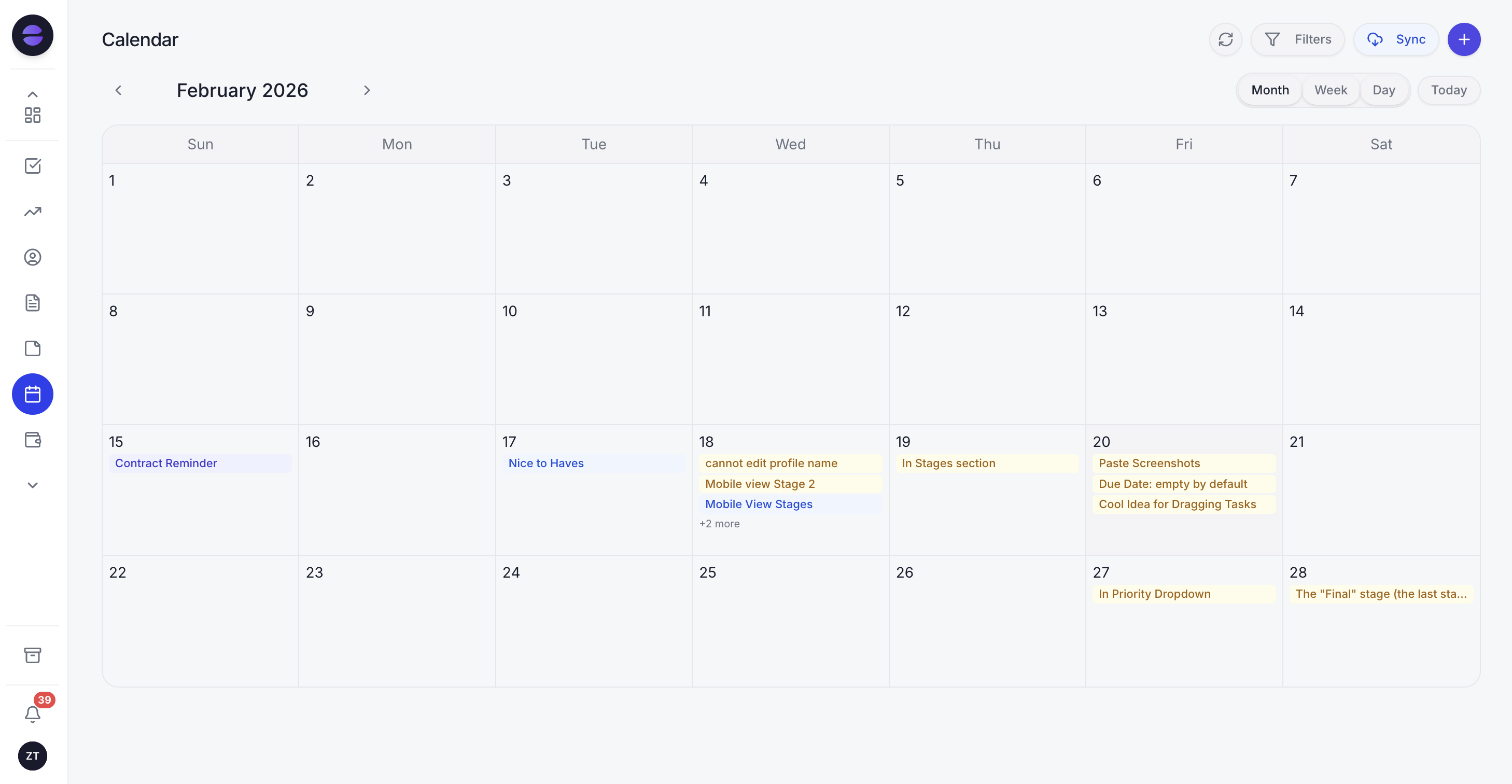 Zoye plots tasks on a timeline automatically - the same tasks your team already works from
The core idea is simple but powerful: in Zoye, the timeline is not a separate document, it is a view. The same tasks appear in list, board, calendar, and timeline views, so the Gantt-style chart is always a live picture of the real plan. Move a deadline once and it updates everywhere. There is no second copy to keep in sync, which is exactly the problem that makes standalone Gantt tools go stale. Dependencies, start and due dates, assignees, and progress all flow from the underlying tasks, so the timeline reflects what is actually happening.
Zoye Assistant - AI that adjusts the plan, not just draws it
The assistant is the differentiator. Where a dedicated Gantt tool waits for you to drag bars around, the Zoye Assistant takes action on the plan. Ask it to reschedule a slipped task and it moves the dependent work along with it. It flags timeline conflicts before they cause slippage, prioritises based on deadlines and workload, drafts the follow-up when a milestone moves, and produces the status summary straight from the live timeline. The chart maintains itself, and the assistant does the work a project manager would otherwise do by hand.
One workspace, not a stack of disconnected tools
A Gantt tool on its own still leaves you stitching together a task manager, a CRM, a calendar, a budget tracker, and a reporting tool. Zoye brings all of it into one workspace. Tasks carry the timeline. The CRM ties project work to the customers it serves. The calendar layers meetings over deadlines. Budget tracking sits beside the schedule, and Reports pulls tasks, deals, budget, and team activity into one exportable dashboard. The timeline is one view of a workspace that already holds everything the project touches, instead of an island you maintain on the side. Zoye Notes, collaborative docs, is rolling out across plans so runbooks and project briefs live next to the work too.
Pricing: Almost Free at $5 per month for 1 member with the full platform including AI. Starter from $29 per month (10 members). Growth from $59 per month (20 members). Scale from $119 per month (100 members).
Best for: Teams that want a live timeline on their real tasks, plus CRM, calendar, budget, and AI in one workspace.
2. GanttPRO - the dedicated Gantt chart specialist
GanttPRO is built around the Gantt chart and does it well. The drag-and-drop scheduling is smooth, dependencies and milestones are easy to set, and the visual polish is strong. For a project manager who lives in the timeline, it is a focused, capable tool.
The trade-off is that GanttPRO is the chart and little else. Task management, CRM, and reporting beyond the timeline are thin or absent, so the chart still sits apart from the team's day-to-day work and has to be kept in sync.
Pricing: From around $9.99 per user per month (billed annually); check the pricing page for current tiers.
Best for: Project managers who want a dedicated, polished Gantt chart and nothing more.
3. TeamGantt - the simple, approachable timeline
TeamGantt focuses on making Gantt charts approachable for people who are not full-time project managers. The interface is clean, the learning curve is gentle, and small teams can get a shared timeline going quickly.
The trade-off is depth and breadth. TeamGantt keeps things simple by design, so heavier scheduling needs and the wider operational stack (CRM, budget, reporting) fall outside its scope.
Pricing: Limited free tier. Paid plans from around $19 per manager per month; check current rates.
Best for: Small teams that want an easy, shared Gantt chart without a steep learning curve.
4. Monday.com - the visual work platform with a timeline view
Monday.com offers a Gantt-style timeline as one of several views on its colourful work boards. For teams already on Monday for general work management, the timeline is a convenient add-on rather than a separate tool.
The trade-off is that the timeline is a secondary view on a board-first product, so dependency handling and true critical-path scheduling are lighter than dedicated Gantt tools, and per-seat pricing climbs as the team grows.
Pricing: Free tier with limits. Paid plans typically from around $9 to $12 per seat per month; timeline view requires a mid tier.
Best for: Teams already using Monday that want a timeline view alongside their boards.
5. ClickUp - the configurable PM suite with Gantt
ClickUp includes Gantt charts inside a broad, highly configurable project management suite. The timeline supports dependencies and milestones, and it sits alongside dozens of other views and features.
The trade-off is the learning curve. ClickUp's depth means real setup before the Gantt view feels clean, and teams that just want a clear timeline often find the surrounding configuration more than they need.
Pricing: Free tier with limits. Unlimited from around $7 per user per month; Business from around $12.
Best for: Teams that want a configurable all-purpose PM tool with Gantt as one of many views.
6. Wrike - the enterprise PM with Gantt and resourcing
Wrike pairs Gantt-style timelines with resource management and reporting aimed at larger teams. The scheduling is capable, and the resourcing features help when many people share a complex plan.
The trade-off is complexity and cost. Wrike is built for bigger organisations, so smaller teams pay for an enterprise-grade surface area they may never use, and onboarding takes real time.
Pricing: Free tier with limits. Paid plans from around $10 per user per month, with higher enterprise tiers.
Best for: Larger teams that need Gantt plus resource management and enterprise reporting.
7. Microsoft Project - the classic heavyweight scheduler
Microsoft Project is the long-standing standard for serious project scheduling. Critical-path analysis, resource levelling, and detailed dependency control are all deep and mature. For complex, schedule-driven projects, it remains powerful.
The trade-off is exactly what teams are moving away from: Project is heavy, carries a learning curve, leans on a desktop-first legacy, and is expensive per seat. For most teams that simply want a clear, shared timeline, it is far more tool than the job requires.
Pricing: Cloud plans typically from around $10 per user per month at the entry tier, rising sharply for the planning and full tiers.
Best for: Schedule-heavy projects that genuinely need deep critical-path and resourcing control.
Best free Gantt chart software
For teams that want a timeline without a heavy per-seat bill, Zoye is the clearest pick because the timeline view is included on the Almost Free entry plan, which covers 1 member at $5 per month with the full platform including AI. The chart is not a stripped-down teaser; it is the same live timeline larger plans use, sitting on real tasks.
TeamGantt and GanttPRO offer limited free tiers, usually capped by project count or number of users, which work for a single small plan but pinch quickly as work grows. Free spreadsheet templates exist too, but they have no real dependencies, no auto-scheduling, and no live updates, so they recreate the very sync problem that good Gantt software is meant to solve.
Best AI Gantt chart software
Zoye is the only option on this list with a true AI-native architecture rather than an AI feature bolted onto a chart. The distinction matters on a timeline more than almost anywhere: plans change constantly, and someone has to absorb the change.
The Zoye Assistant reschedules slipped tasks and carries the dependent work with them, flags timeline conflicts before they turn into missed deadlines, rebalances workload when one person is overloaded, drafts the status update straight from the live plan, and answers questions about the schedule in plain language. Where dedicated Gantt tools show AI suggestions in a side panel and leave the dragging to you, Zoye edits the plan itself. The timeline stays current because the assistant keeps it current.
How to choose the right Gantt chart software for your team
Three questions narrow the choice.
1. Do you want a standalone chart or a connected timeline? If you only ever need the chart and nothing else, a specialist like GanttPRO or TeamGantt is focused and capable. If you want the timeline to reflect the work your team actually does day to day, a connected platform like Zoye avoids the sync problem entirely.
2. How complex is your scheduling? For genuinely complex, critical-path-driven schedules, Microsoft Project or Wrike have the depth. For the far more common case of a clear team timeline with dependencies, that depth is overkill and the heavier tools cost time and money you do not need to spend.
3. What do you expect from AI? If a suggestion sidebar is enough, most tools have one. If you want AI that actually adjusts the plan, reschedules work, and writes the status update, Zoye is the AI-native pick.
Why teams pick Zoye for timeline-based planning
A few themes come up consistently.
The timeline never goes stale. Because it is a view on the real tasks rather than a separate chart, moving a deadline updates the timeline automatically. There is no second copy to maintain.
The whole stack consolidates. Tasks, CRM, calendar, budget, reporting, and the timeline all live in one workspace, so the plan connects to the work, the customers, and the numbers instead of sitting apart from them.
The AI does the project manager's busywork. Rescheduling, conflict-flagging, workload balancing, and status updates happen through the assistant, freeing the team from the manual upkeep that makes standalone Gantt charts so tedious to keep current.
Try Zoye with your team. The entry plan is Almost Free at $5 per month for 1 member, with the full platform including AI.
For more context, see the best Microsoft Project alternatives, the best project management apps in 2026, the best Smartsheet alternatives, and the best Wrike alternatives.