
DocuSign is the name most people reach for when a document needs a signature, and for good reason: it is reliable, widely recognized, and legally sound in most markets. For a large enterprise with a procurement team, a legal department, and hundreds of contracts a month, it earns its price.
The problem is that most people searching for a DocuSign alternative are not that enterprise. They are solo owners, agencies, consultants, and small teams who need a handful of documents signed each month and cannot understand why they are paying enterprise money for it. The per-seat pricing climbs quickly, the feature set is far deeper than they will ever use, and the whole thing does one narrow job: it collects a signature and then goes quiet.
That last point matters more than price. A signature is never the real work. The real work is the client relationship around it: sending the proposal, chasing the person who has not signed, logging the reply, and moving the deal forward. DocuSign collects the ink and leaves everything else to you. This guide covers the eight best DocuSign alternatives in 2026, ranked for the owners who actually search for one, and it starts with the option that stops treating the signature as the end of the job.
Pricing reflects published rates as of July 2026; check each vendor's pricing page for current figures.
Why owners are looking beyond DocuSign in 2026
Four trends are pushing small businesses to rethink their e-signature stack.
The price stopped matching the usage. DocuSign's plans are built around per-seat pricing and envelope limits that make sense at scale but feel punishing for a small team signing a dozen documents a month. Cheaper, simpler tools now deliver the core e-signature experience for a fraction of the cost, and owners have noticed.
A signature is one step, not the whole workflow. Owners increasingly realize that the signature is the easy part. The hard part is the chasing: the proposal that sat unopened, the client who said "yes" verbally but never signed, the renewal that lapsed because nobody followed up. A signing tool does nothing about any of that. It waits for you to do the work.
Software you stopped using is the real waste. Most owners have a graveyard of tools they bought and abandoned. A standalone signing app is a classic example: another login, another subscription, another thing to maintain, all for a task that happens a few times a week. The trend in 2026 is toward fewer tools that do more, and toward software you talk to rather than operate.
AI changed the expectation. Owners no longer want a tool that simply stores a document and waits. They want something that acts: sends the follow-up, notices the unsigned proposal, updates the deal, and reminds them before a renewal slips. The bar has moved from "hold my document" to "run this process for me."
The 8 best DocuSign alternatives in 2026
1. Zoye - the operator that runs the client-and-signature process for you
Zoye is the strongest DocuSign alternative for owners whose real problem is not collecting a signature but managing the entire client relationship around it. Instead of a narrow tool that captures ink and stops, Zoye is the AI that runs your business: it tracks each document inside the deal, chases the client who has not responded, and keeps the whole process moving without you babysitting it.
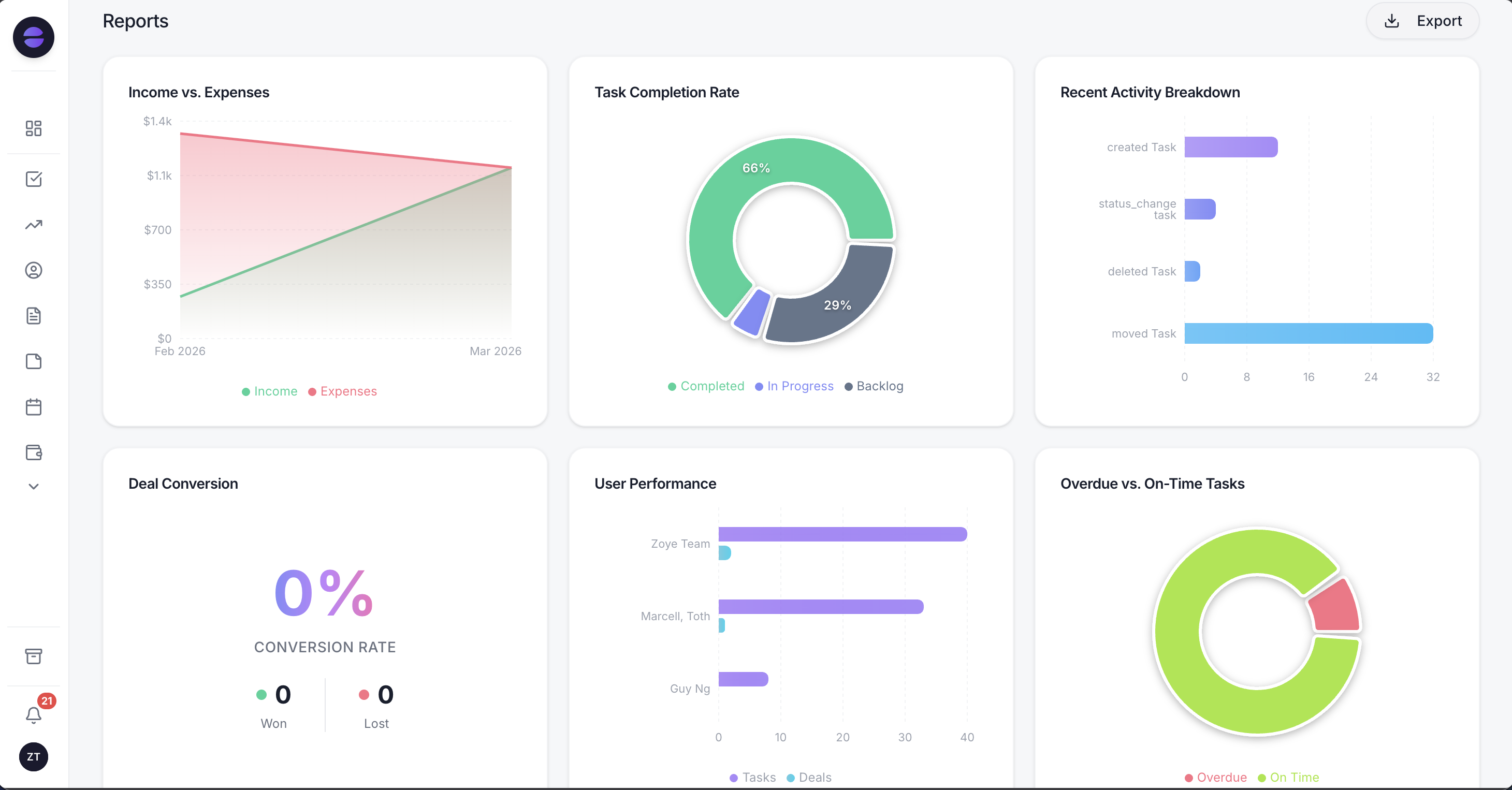 The Zoye dashboard: your whole business at a glance, with proactive AI Insights and Zoye Assistant always available on the right
To be clear about the category: Zoye is not a native e-signature product, and this guide will not pretend it is. What Zoye does is manage the process that a signing tool ignores. A proposal or agreement lives on the deal as a tracked document. The moment it is sent, the assistant knows it is outstanding. If the client goes quiet, Zoye chases them. When they reply, the assistant logs it against the right deal and nudges the stage forward. For the many owners who bought DocuSign mainly to look professional and get a "yes" on paper, that surrounding workflow is the thing they were actually missing.
The Zoye Assistant is where the difference becomes obvious. It does not just suggest, it executes. Tell it "chase everyone who has not returned their agreement this week" and it drafts and sends the follow-ups, in your voice, across email and WhatsApp, then reports back on who replied. Tell it "remind me before any client renewal in the next 30 days" and it builds that automation on the spot, no workflow canvas, no setup screens. You can run the whole thing by talking to it, including from your phone over WhatsApp, and a non-technical owner never has to maintain any of it.
Around that sits the full workspace: a CRM to hold the clients and deals, tasks and a calendar to schedule the work, budget tracking to see what each deal is worth, and reports that pull it all together. The document and its signature become one tracked event inside a business that manages itself, rather than an isolated task in yet another app you have to remember to check.
Pricing: Almost Free at $5 per month for 1 member with the full platform including AI. Starter from $29 per month (10 members). Growth from $59 per month (20 members). Scale from $119 per month (100 members). Every plan is flat-rate, so a growing team is never punished per seat.
Best for: Owners, agencies, and consultants who care less about the signature itself and more about running the client relationship and follow-up around it.
2. PandaDoc - the document and proposal platform
PandaDoc is the most direct DocuSign alternative for teams that live in proposals and quotes. It combines e-signature with document creation, templates, and payment collection, which makes it a strong fit for sales teams sending polished proposals.
The trade-off is that PandaDoc is still a document tool at heart. It creates and signs beautifully, but the client relationship, the follow-up, and the deal tracking around the document sit in a separate CRM, so you are back to stitching tools together.
Pricing: Free e-sign tier. Paid plans typically start around $35 per seat per month; check the current pricing page.
Best for: Sales teams that send a high volume of proposals and quotes.
3. SignNow - the affordable business e-signature
SignNow, part of the airSlate family, is a lower-cost DocuSign competitor that covers the core signing needs well: templates, bulk sending, and team management at a friendlier price point.
The trade-off is that it is purely a signing tool. It does the one job competently and cheaply, but everything around the signature, the chasing and the client tracking, is left to you and whatever other software you run.
Pricing: Business plans typically start around $8 per seat per month billed annually; verify current rates.
Best for: Small teams that want straightforward, low-cost e-signature.
4. Dropbox Sign - the clean, simple signing tool
Dropbox Sign (formerly HelloSign) is known for a clean interface and a genuinely usable free tier. For owners who occasionally need to sign or send a document and value simplicity over depth, it is one of the easiest tools to pick up.
The trade-off is limited depth. The free tier caps documents per month, and the feature set is deliberately narrow. It signs and stores, and that is where it stops.
Pricing: Limited free tier. Paid plans typically start around $15 per month for a single user.
Best for: Individuals and very small teams who want simple signing with a free option.
5. Adobe Acrobat Sign - the PDF-native choice
Adobe Acrobat Sign is the natural pick for anyone already living inside Adobe's ecosystem. If your documents are already PDFs in Acrobat, adding signatures without leaving that environment is convenient.
The trade-off is cost and complexity. Adobe's pricing and licensing can be as heavy as DocuSign's, so this is rarely the "cheaper" answer, though it can be the "already paying for it" answer.
Pricing: Typically bundled with Acrobat plans or sold from around $15 per month; check current figures.
Best for: Teams already committed to the Adobe ecosystem.
6. Xodo Sign - the value-focused signing tool
Xodo Sign (formerly Eversign) is a value-oriented DocuSign alternative that covers the essentials, templates, in-person signing, and audit trails, at a competitive price, with a workable free tier.
The trade-off is brand and ecosystem depth. It is a capable signing tool but a narrower one, without the surrounding proposal or CRM layer that some teams want.
Pricing: Free tier available. Paid plans typically start around $10 per month.
Best for: Budget-conscious teams that want core signing features cheaply.
7. SignWell - the genuinely free-friendly option
SignWell (formerly Docsketch) is one of the friendliest options for owners who want a real free tier and a low entry price. The interface is clean, setup is fast, and the free plan covers a small number of documents per month.
The trade-off, as with the others in this group, is scope. It is a focused signing tool. It gets a document signed and then, like the rest, it waits for you to handle everything that comes next.
Pricing: Free tier with a monthly document limit. Paid plans typically start around $10 per month.
Best for: Solo owners and freelancers who want signing with a real free option.
8. Documenso - the open-source, self-hosted choice
Documenso is the answer for the technical owner who searched "docusign free open source." It is an open-source e-signature platform you can self-host, giving you full control of your data and no per-signature fees.
The trade-off is that self-hosting is real work. You are responsible for hosting, updates, and maintenance, which only makes sense for teams with the technical appetite to run their own stack.
Pricing: Free and open source if self-hosted. A managed cloud plan is also offered; check current rates.
Best for: Technical, privacy-focused teams comfortable self-hosting.
Want to see it in action?
See Zoye catch a new lead, answer on WhatsApp and set up the follow-up, all from one message.
See How It WorksBest cheap and free DocuSign alternatives
If the search was simply "why am I paying this much," the cheapest genuine options are SignWell, Dropbox Sign, and Xodo Sign, all of which offer a free tier and low-cost paid plans that cover the essentials. Documenso is free if you are willing to self-host. Each of these will collect a signature for far less than DocuSign.
The honest caveat is that "cheap signing tool" solves the wrong problem for many owners. Saving twenty dollars a month on a signing app does not help if the real leak is the three proposals a month that never get chased and quietly die. Zoye's entry plan is worth a look here precisely because it is only $5 per month, covers 1 member with the full platform including AI, and closes that leak by chasing every outstanding document for you, rather than only collecting the ones that come back on their own.
Best DocuSign alternative for managing the whole client process
This is the distinction that most roundups miss. Every tool above, and DocuSign itself, treats the signature as the deliverable. Send document, collect signature, done. In reality the signature sits in the middle of a longer process: qualify the lead, send the proposal, follow up until they respond, get the agreement signed, track the deal, and remember the renewal.
Zoye is the only option here built around that whole process rather than the single signing step. Zoye captures the lead, drafts and sends the proposal follow-up, chases the client who has not signed, logs their reply, updates the deal stage, and reminds you before the renewal, all on your instructions and all trackable in one workspace. The signature is simply one tracked moment inside a business that runs itself, instead of the only thing your software cares about.
See what Zoye can do for you
CRM, deals, tasks and your Instagram, Facebook and WhatsApp automations in one workspace. Just ask Zoye and it sets any of it up for you.
Explore FeaturesHow to choose the right DocuSign alternative
Three questions narrow it down fast.
1. Is your problem the price, or the process? If you genuinely only need to sign a few documents and DocuSign is just too expensive for that, a cheap signing tool like SignWell or Dropbox Sign solves it. If the real pain is chasing clients and tracking deals around the document, a signing tool will not fix that, and Zoye will.
2. Do you send proposals, or just sign them? Heavy proposal senders lean toward PandaDoc for the document creation. Owners who mostly need agreements returned and followed up lean toward Zoye, which manages the return and the follow-up rather than the design.
3. How much do you want to maintain? If you want another app to log into and operate, the standalone tools are fine. If you would rather describe the outcome and have it handled, including over WhatsApp, Zoye is the one you talk to instead of the one you maintain.
Why owners pick Zoye
A few themes come up again and again.
The signature stops being an island. It becomes one tracked step inside the deal, with the client, the follow-ups, and the reminders all in the same place.
The assistant does the chasing. The proposals that used to die from silence get followed up automatically, in your voice, across email and WhatsApp, so fewer deals slip.
You run it by talking to it. Instead of maintaining yet another tool, you tell Zoye the outcome you want and it builds the automation and runs the process itself. A non-technical owner never has to configure a workflow.
Try Zoye with your team. The entry plan is Almost Free at $5 per month for 1 member, with the full platform including AI.
For more context, see the best CRM software in 2026, our HubSpot vs Pipedrive comparison, our guide to sales follow-up emails, and the full Zoye blog.